Liu Wenwen
*刘文文 *
- 分类: 艺术瑰宝
- ID: 1866410910645301249
Home CategoryArtsLiu WenwenPlay5 minsLiu Wenwen was born into a suona-playing family in Jining city, Shandong provice, China. Initially reluctant to learn the suona, known for its loud, high-pitched sound, she carries on her family's seven-generation tradition of performing.ShareCatalogue1. Early Life and Family Heritage2. Challenges and Reluctance3. Education and Musical Development4. Revival and Modernization of Suona5. Future Aspirations
Early Life and Family Heritage
Liu Wenwen was born into a family with a deep-rooted tradition of suona playing in Jining, a city in Shandong province, China. The suona, known for its "loud, high-pitched" sound, is a traditional Chinese musical instrument often played at weddings and funerals in rural China. Despite its prominence in her family, Liu initially found the instrument burdensome and was reluctant to learn it. Her father's family had been suona performers for seven generations, and her mother's side traced their musical heritage back to the early Qing Dynasty (1644-1911).
Growing up, Liu's childhood was steeped in the sounds of suona, as both her parents were suona players. The environment was such that she began learning the instrument at the tender age of four. Despite her initial reluctance, her parents' insistence and their dedication to preserving their musical heritage meant that Liu was deeply involved in the practice from a young age.
Challenges and Reluctance
During her early years, Liu faced ridicule from her peers, who associated the suona with rural customs and considered it outdated. This period coincided with China's reform and opening-up in the 1990s, when modern and international trends were highly esteemed. Consequently, Liu felt embarrassed about her association with the instrument, which was perceived as "hillbilly art."
Despite these challenges, her parents remained steadfast in their desire for her to continue the family tradition. They would wake her up at 4 a.m. to practice in a nearby park, ensuring that her training did not disturb the neighbors. The rigorous practice regime not only honed her skills but also instilled a disciplined work ethic in Liu.
Education and Musical Development
Liu's perception of the suona transformed when she joined the Shanghai Conservatory of Music in 2008, where she studied under Professor Liu Ying, a highly respected suona player. The experience was eye-opening, as she discovered the beauty and complexity of suona music, which she had not appreciated before. This marked the beginning of her deep love and commitment to the instrument.
At the conservatory, Liu pursued her studies with vigor, becoming the first suona player in China to pursue a doctoral degree in the instrument. Her academic journey was complemented by her passion for teaching, as she began imparting her knowledge to students at her alma mater. She enjoyed exchanging ideas with younger students, fostering a renewed appreciation for the suona as a cultural heritage.
Revival and Modernization of Suona
Liu Wenwen's efforts have played a significant role in the revival of the suona. In recent years, the instrument has gained popularity among younger audiences, sometimes being incorporated into modern genres such as jazz and opera. Liu has been an active proponent of this trend, collaborating with contemporary composers and performers to bring a fresh perspective to traditional suona music.
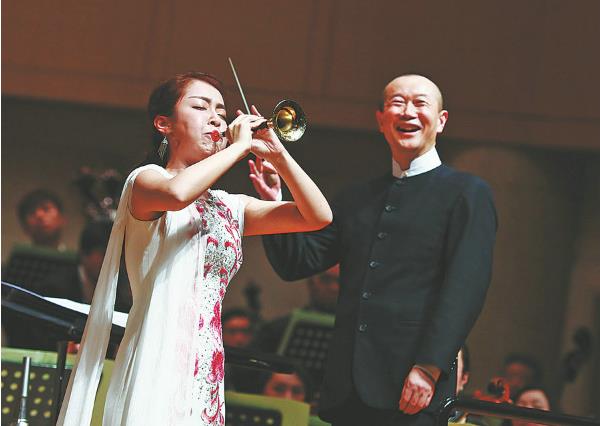
One of her noteworthy performances was at a concert in Sydney, Australia, in 2017, where she played alongside award-winning composer Tan Dun. The piece performed, Hundreds of Birds Paying Homage to Phoenix, is a suona masterpiece that encapsulates the instrument's expressive capacity. The concert was a turning point, showcasing suona to an international audience and demonstrating its versatility and cultural richness.
Future Aspirations
Liu Wenwen's journey with the suona has been one of transformation from reluctance to reverence. Her dedication to the instrument has not only helped preserve a vital aspect of Chinese cultural heritage but also brought it onto the global stage. She remains committed to her mission of furthering the suona's popularity, actively engaging with young musicians and exploring new musical landscapes.
Her vision includes collaborating with artists from various genres to continue evolving the suona's sound and reach a broader audience. Liu's story is a testament to the power of cultural heritage and innovation, as she continues to inspire a new generation of musicians to embrace and celebrate traditional Chinese music. Article reference1. Musician's dedication helps revive tradition. chinadaily.com.cn. 20232. Young Chinese takes 'hillbilly' music to international stage. chinaservicesinfo.com. 20233. Young Chinese takes "hillbilly" music to international stage. chinadaily.com.cn. 20234. The suona's second wind. chinaservicesinfo.com. 2021Photo Gallery(4 pictures)CategoriesArtsTagChinese MusicArtistsRelatedSuonaBirds Paying Homage to PhoenixCatalogue1. Early Life and Family Heritage2. Challenges and Reluctance3. Education and Musical Development4. Revival and Modernization of Suona5. Future Aspirations- - - []








